
Getting into affiliate marketing is exciting and can be really profitable once you start to figure things out. But nothing puts a damper on your motivation quite like getting banned from an affiliate program, especially after you’ve put time and effort into building your online business. Drawing from my own experience and a few close calls, I’m sharing here what I’ve learned about staying in the good graces of affiliate programs. With a bit of planning and attention to detail, you can avoid the headaches and keep building long-term income streams.

Why Affiliates Actually Get Banned
Program bans aren’t always about someone doing something sketchy on purpose. Most of the time, it’s because the rules weren’t fully understood, or a little detail slipped through the cracks. Having seen some friends get the boot for things they had no idea were a problem, I know how frustrating it can be.
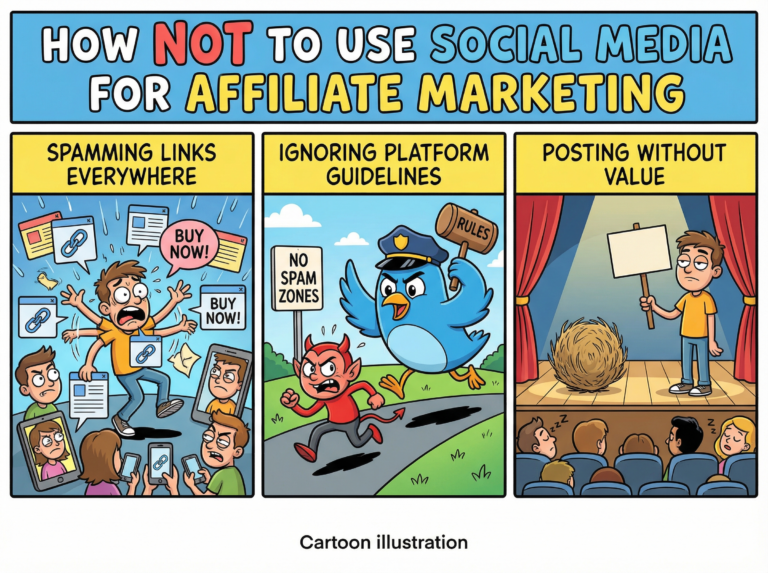
Affiliate networks and vendors work hard to protect their reputation, and they rely on affiliates to do things right too. That means they expect all partners to follow their guidelines closely. Something as basic as not disclosing affiliate links or being too aggressive in your email campaigns could cost you your account.
When I first started out, I didn’t realize that programs have teams watching for noncompliance using automated tools and manual reviews. One wrong move might get your account suspended before you have a chance to explain yourself. So, having a firm understanding of common reasons for account bans can save you a lot of trouble.
Understanding Affiliate Program Rules (And Why They Matter)
Every affiliate program is different, with its own set of guidelines and policies. One of the biggest mistakes I see is people treating all programs the same. What’s allowed on one platform might get you banned instantly somewhere else.
- Link Placement: Some programs are really strict about where and how you’re allowed to use your affiliate links.
- Traffic Sources: You may not be able to use paid ads, certain social platforms, or even email marketing. It’s important to know exactly what’s allowed.
- Brand Use: Using a brand’s trademark in your domain or ad headlines can spell trouble.
- Disclosure: Not disclosing affiliate relationships is not just an ethical miss, it’s required in many places (especially if you have US traffic).
- Cookie Stuffing: This is when hidden cookies are dropped without a real referral, and this will get you banned from nearly any reputable network.
I always recommend reading through the terms of service carefully, even if it takes a bit of extra time. Every program spells out what’s OK and what’s not in their own way—and it’s on you to stay within those boundaries. Sometimes, going through discussion forums or reaching out to the program’s support team can give extra clarity that isn’t obvious from the documentation alone.
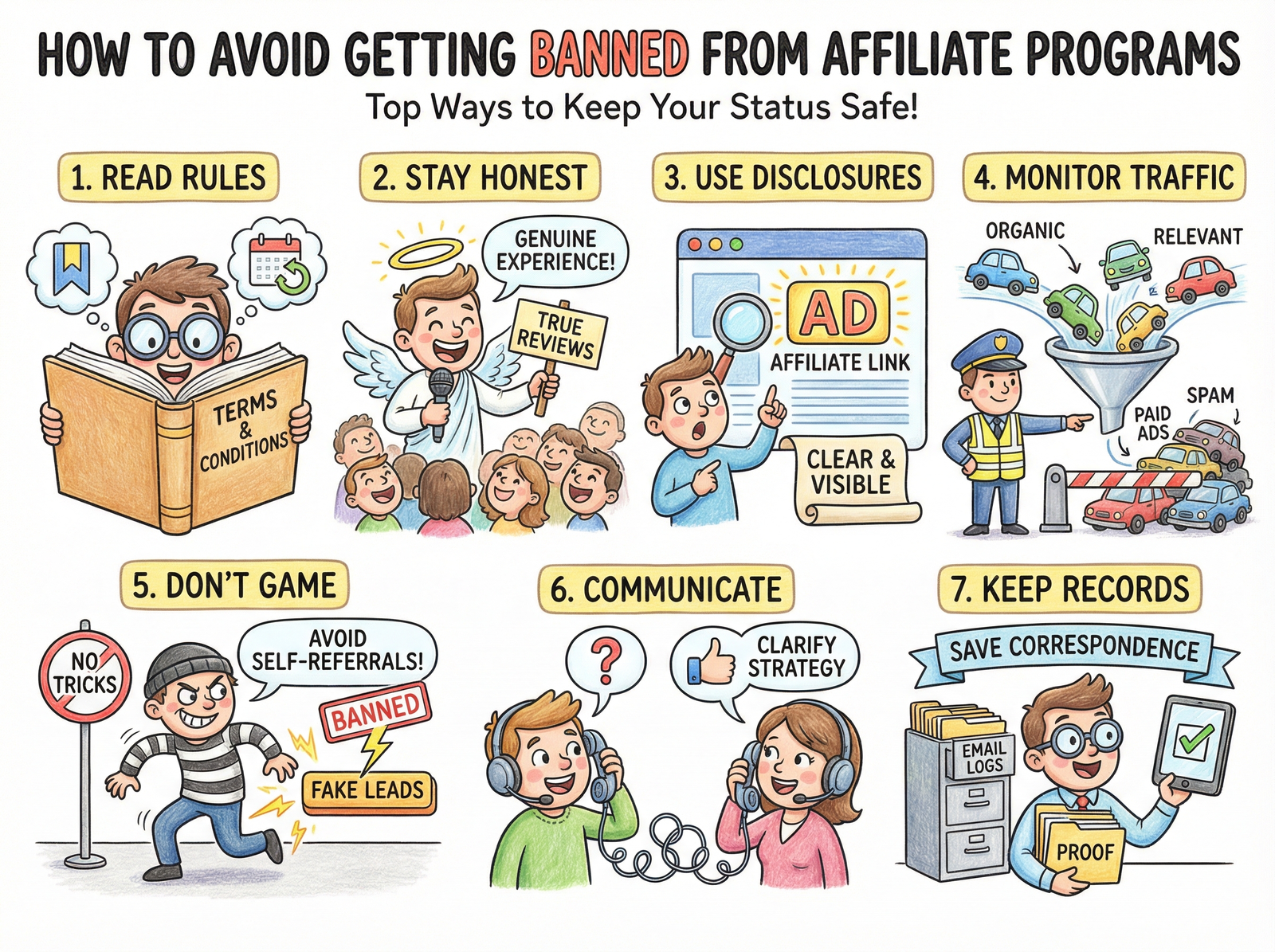
Top Ways to Avoid Bans and Keep Your Affiliate Status Safe
Drawing from both personal experience and the stories I hear from the community, there are a few straightforward practices that help you stick around for the long haul:
- Read and Bookmark the Program’s Rules: Keep the terms handy, and check back for updates. Companies sometimes tweak their policies without much warning.
- Stay Honest With Your Audience: Using honest product reviews and genuine experiences not only helps build trust with your audience but also keeps you in line with most programs’ requirements.
- Use Correct Disclosures Every Time: Make sure every page, post, video, or email that contains affiliate links includes a clear and easy-to-find disclosure.
- Monitor Your Traffic Sources: A lot of programs don’t want junk traffic, paid search for branded terms, incentivized clicks, or anything dodgy. Clean and relevant traffic is always safer.
- Don’t Game the System: Avoid tricks like self-referrals, fake leads, or cloaking. Not only is it risky, but it also makes your business unsustainable.
- Communicate With Your Affiliate Manager: If you’re ever unsure about a specific strategy or source, just ask. Managers are usually happy to clarify, and it leaves a good impression.
- Keep Updated Records: Save any email correspondence with program managers and screenshots of your compliance. If there’s ever a question about something you did, having proof will make your case a lot easier.
In my own business, having a checklist for new promotions helps me catch anything that needs disclosure or clarification, so I’m not scrambling when new terms roll out or audits happen. I also encourage new affiliates to join online communities or networking groups, as these can be great for sharing best practices and keeping up with ever-shifting industry standards.
Common Mistakes That Can Get Affiliates Banned
These blunders are super common, especially with new affiliates just getting started:
- Promoting in Banned Countries or Niches: Programs often blacklist some countries or categories. Doublecheck your target audience before promoting.
- Forgetting Regular Disclosures: Skipping disclosures even once puts your account at risk.
- Email Spam and Compliance: Breaking CANSPAM laws in email campaigns leads to trouble with networks (and legal headaches, too).
- Keyword Violations: Bidding on brand names, misspellings, or restricted keywords in search ads can get you flagged.
- Misleading or Overhyped Claims: Making promises the product can’t keep or faking testimonials looks bad and isn’t tolerated by most networks.
When I made my first few sales, I got excited and started ramping things up fast. I almost slipped up by running Google Ads with the company’s branded keywords, but a quick check with their team saved me from getting banned. Turns out, catching your own mistakes ahead of time really pays off! Don’t be afraid to reach out to your affiliate contacts when you want to try new things. Even if your idea is creative, it should always fall within the allowed guidelines. Consistent transparency with your approach not only keeps you compliant but can open up more opportunities down the road.
Building Sustainable Affiliate Funnels (And Why Wealthy Affiliate Helps)
The real goal isn’t just to avoid bans; it’s to build a business that sticks around and grows. Sustainable affiliate funnels mean you’re focusing on:
- Targeting the right audience
- Making helpful and honest content
- Following program rules every step of the way
This is actually where Wealthy Affiliate has made a huge difference for me. I found their step-by-step training and community support really useful when it came to sorting out my strategy and understanding how not to cross lines I didn’t even know existed. Their platform always pushes for ethical, program-friendly practices, so you’re set up for longterm wins instead of short boosts followed by costly bans.
It’s pretty helpful to have access to lessons on compliance, site building, and funnel design, plus a super active community where you can ask about the latest guidelines or get a second opinion before launching a new campaign. If you’re interested in a safe, step-by-step way to start affiliate marketing that actually lasts, it’s worth checking out here.
Extra Tips to Stay Compliant
- Join Official Newsletters and Forums: Program updates can come by email or community boards, so keep an eye on these channels and don’t ignore updates from your affiliate management team.
- Audit Your Old Content: Sometimes rules change after you’ve published a post. Regularly go back and make sure older content still lines up with the latest guidelines. Scheduling a monthly review can keep your entire site in good standing.
- Don’t Share Conflicting Offers: Some networks prohibit links to direct competitors on the same page or across your funnel. Make sure your site structure aligns with each program’s unique requirements.
- Be Transparent with Bonuses and Incentives: If you’re offering an extra ebook or bonus, let users know exactly what they’re getting and make sure it doesn’t violate program terms. Clear communication keeps your credibility intact.
Even adding a once-per-quarter compliance audit to your process can save you from a surprise program ban down the road. It only takes a few hours each year and can protect all your hard work.
Frequently Asked Questions
Here are some real questions I hear from other affiliates getting started with compliance:
Question: What happens if I’m banned from one affiliate program? Does it affect my other accounts?
Answer: Usually, a ban is just for the specific program. But large networks (like Amazon or ClickBank) may share info internally. Staying compliant with one program usually sets you up well across the board. Also, being part of a reputable affiliate community gives you better insight into how to react if this ever happens.
Question: Which is worse—not disclosing links or making the wrong claim?
Answer: Both are pretty risky, but failing to disclose is the most common and easiest to fix. Always make your relationship clear, and doublecheck product claims before publishing. Over time, making transparency your normal practice helps avoid slip ups.
Question: Can I appeal a ban? What should I do if it happens?
Answer: Sometimes. Prepare your case, offer proof of compliance, and always respond politely. But it’s usually tough to get reinstated, so it’s way better to avoid needing an appeal in the first place. Yet, being able to show your effort at following rules can make a difference.
Things Worth Considering Before Joining Any Affiliate Program
Planning ahead sets you up for success. I like to check:
- Is the program’s reputation solid?
- Are the program’s policies clear and reasonable for me?
- Is it easy to contact their support team?
- Are the commissions and cookie durations competitive enough for my niche?
Doing this has helped me steer clear of networks that are too restrictive or that have a reputation for surprise bannings. Wealthy Affiliate offers tools and training to help compare different programs and see where you’re most likely to thrive without compliance headaches. You can even connect with others for honest ratings, which adds an extra layer of security.
Taking affiliate marketing seriously means treating the rules with respect. Reliable methods and a supportive learning environment (shout out again to Wealthy Affiliate) helped me keep my accounts, while growing my income year after year. A few simple habits, plus using the right tools, are more than enough to avoid losing all your hard work overnight. Here’s to safe, steady growth!