
Affiliate marketing is everywhere these days, and there’s a steady stream of training programs promising fast results and high commissions. While these courses usually teach the basics pretty well—how to pick products, set up funnels, or run ads—they often skip over an area that’s really important for long-term success: ethical promotion. I’ve been around affiliate marketing long enough to see what happens when ethics take a back seat, and it’s not pretty. But, strangely, most affiliate marketing training out there barely touches the topic, or glosses over it entirely.

What’s Usually Covered in Affiliate Marketing Training?
Most affiliate marketing training programs focus on step-by-step action plans. You’ll learn about niche research, how to build or optimize a website, SEO tricks, email marketing, and the process of applying for and working with affiliate programs. These topics are practical and necessary, for sure. But I’ve noticed the conversation tends to end at conversion rates, tracking links, and commission structures. The main goal seems to be maximizing earnings fast, not building a reputation or a business that lasts.
This money-driven focus means gray areas, like misleading claims or hiding affiliate relationships, don’t get much attention. Practical stuff is front and center, while the right way to treat your readers and partners is mostly left out or just mentioned in passing. Training often says, “Get traffic here, promote there,” but rarely flags what happens if those actions aren’t done transparently. When you look for guidance about being clear with your audience, you usually have to search for it separately.
Why Ethics Are Sidelined So Often
Affiliate marketing, especially when taught as a side hustle or “fast cash” opportunity, tends to attract people looking for shortcuts. It’s totally understandable to want results quickly, but training programs know what sells: clear paths to bigger paydays. They avoid anything that might seem like an obstacle to that, even if it’s something as super important as treating your audience fairly.
Ethical conversations also take more time. Explaining how to communicate honestly, manage expectations, or spot shady offers isn’t as straightforward as teaching someone to insert a tracking link. Plus, it might make some students pause or question the practices they see promoted elsewhere. Many course creators choose the easy route, focusing on the flashy parts so their programs feel more valuable in a short timeframe. The demand for instant success also leads to a “results first” mentality, overshadowing the importance of reputational longevity. When time is limited, ethics are often the first thing to get trimmed.
Consequences of Ignoring Ethical Practices
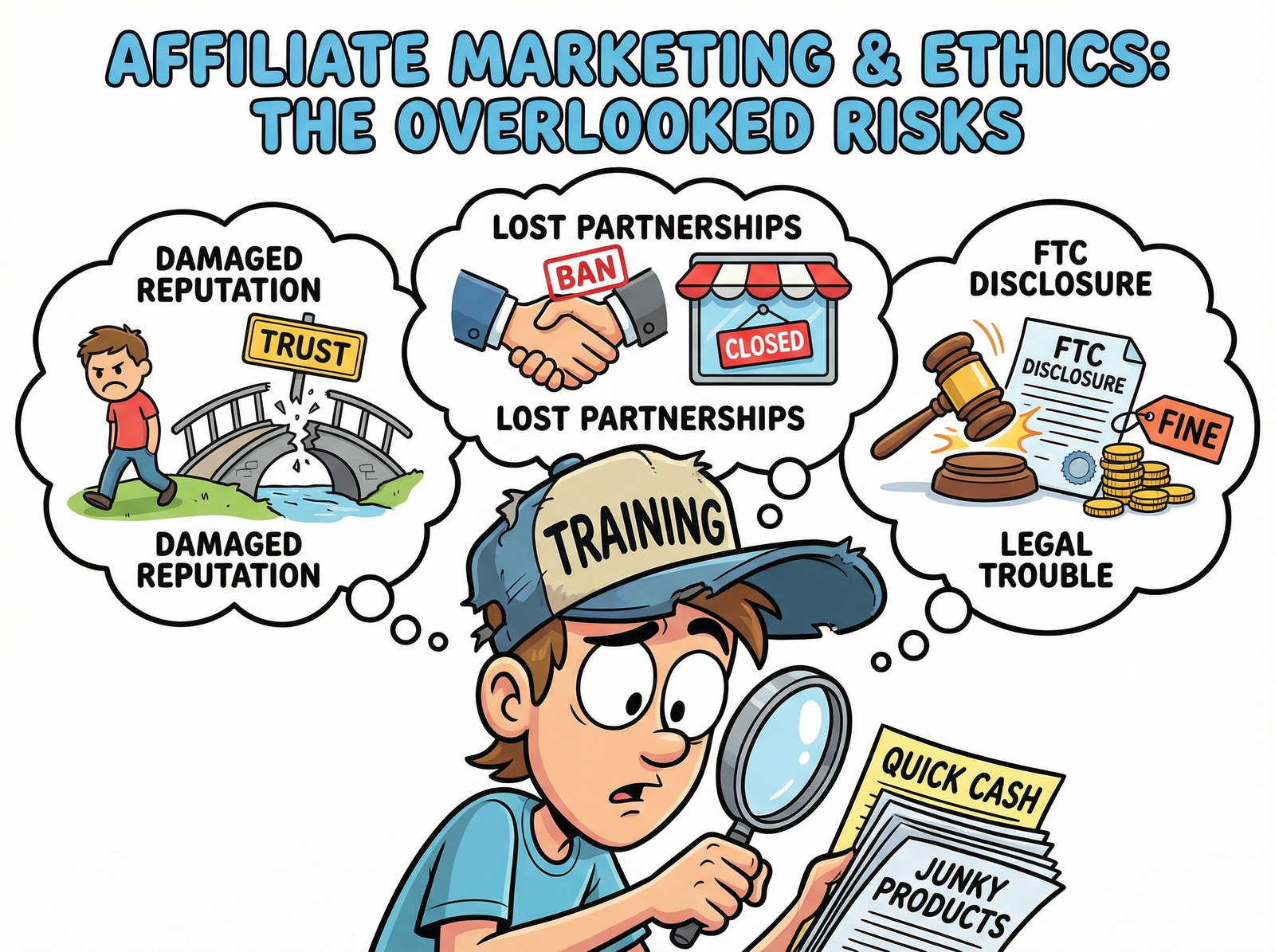
When training skips over the importance of ethics, new affiliates end up learning the hard way. I’ve watched people burn through audiences because they chased quick cash, recommending junky products just for the commission, or being less than transparent about their relationships with companies.
- Damaged Reputation: It’s much harder to rebuild trust than it is to earn it in the first place. When your audience feels tricked, they leave and rarely come back.
- Lost Partnerships: Affiliate programs are cracking down on shady tactics. Getting banned means losing a stream of income and often getting blacklisted elsewhere.
- Legal Trouble: The FTC makes it clear: you have to disclose your affiliate status. Training that skips disclosure details puts new marketers at risk.
The fallout from ignoring ethics isn’t just about bad publicity or a tap on the wrist. Legal cases, lost commissions, and negative word-of-mouth can follow you for a long time. Ethically questionable behavior can also poison your brand, making future efforts much more challenging.
Why Some Programs Do Teach Ethics (And Stand Out)
Even though most trainings don’t, there are affiliate marketing programs that put a real focus on building businesses the right way. Usually, these are run by people who’ve done affiliate marketing for years, discovered what works and what backfires, and know that honest, ethical practices are the foundation for actual success.
They’ll spend time explaining what makes a product worth promoting, how to write honest reviews, and how to disclose partnerships properly. You’ll see lessons on evaluating offers before recommending them—actually trying products, sharing real experiences, and keeping your audience informed. Some even include templates for disclosures and encourage ongoing communication with your followers. This style not only builds a better reputation but actually helps conversions in the long run. People are way more likely to trust and buy from someone who puts them first.
In addition, programs that focus on ethical practices also create communities where affiliates can ask about tricky situations or share lessons learned. This sharing of real experiences means you’re never left guessing about whether a promotion might cross a line. Training that puts ethics front and center doesn’t just result in better marketers, but in honest and open communities that lift everyone up. For example, mentors might share stories where a transparent approach led to more loyal audiences, even if it meant slower initial growth. Ultimately, this proactive stance gives new affiliates the confidence to approach difficult decisions with clarity.
Real-Life Ethical Dilemmas in Affiliate Marketing
If you’re wondering what sorts of sticky situations can pop up, there are plenty of classic examples:
- Biased Reviews: Writing glowing recommendations for every single product, even the ones you haven’t actually used, comes off as fake after a while. Audiences pick up on it fast.
- Overpromising: Some affiliates use hype to boost conversions, but promising results you can’t deliver is a quick way to lose trust. It only takes one letdown for people to tune out for good.
- Hiding Disclosures: Burying your affiliate relationship at the bottom of a long post (or not mentioning it at all) is actually against the law in places like the US, UK, and EU. Good training will always make this clear.
- Pushing Shady Products: Sometimes high commissions are attached to questionable products or services. Short-term thinking here can destroy your relationship with your list or followers.
I’ve watched marketers get trapped by these choices because no one in their training ever told them about the downside, or showed them how easy it is to do things right. There are also nuanced dilemmas where an offer looks legit at first glance but, upon closer inspection, reveals hidden fees or less-than-ideal service. Knowing how to assess offers with a critical eye is crucial—and, unfortunately, glossed over in most programs.
What Ethical Promotion Should Actually Look Like
Doing affiliate marketing ethically isn’t rocket science. It just requires a switch in mindset—from “how much can I make this month?” to “how can I help my audience and build a future here?” Here are a few daily habits that make a difference:
- Transparency: Tell your followers about your affiliate relationships clearly and up front. I always put disclosures right near any links.
- Honest Reviews: Only recommend stuff you’d vouch for in real life. If you haven’t tried it, say so and tell people why it still made your list.
- Real Value: Go beyond the product pitch. Offer tips, comparisons, and real solutions, so your audience keeps coming back, even when they aren’t ready to buy.
This approach isn’t just “nice.” It builds trust, which turns into long-term sales and a business you might actually be proud of. These methods also mean you’ll reduce refund requests, negative comments, and other headaches that come from dissatisfied buyers. It’s about creating a sense of community, not just a sales channel.
How Wealthy Affiliate Approaches Ethics in Training
Most people stumble onto this after getting burned. A refund request they couldn’t handle, a banned affiliate account, or traffic drying up as people figure out the game. Luckily, not all affiliate marketing education ignores ethical promotion. My experience with Wealthy Affiliate changed everything for me. Here, ethics aren’t an afterthought; they’re woven right into the process.
This training program explains how to build trust, value, and relationships through honest recommendations and open communication. Every step, from picking a niche to creating content, includes real-world examples of how to do it without trickery or shortcuts. You’ll learn not just what works today, but what will keep working in a year, or five years from now.
By following their roadmaps, I’ve built sites where readers comment with genuine questions, thank me for useful tips, and stay on my email list for the long haul. No fear of sudden bans or public backlash, because I know exactly how and why to keep things transparent and fair. The training also encourages self-assessment after each promotion—did you share everything your audience needed? Were you clear about your intentions? This continual reflection not only strengthens your credibility, but creates a cycle where each campaign improves, both in terms of results and reputation. Over time, faithful readers come to expect—and deeply value—honesty.
Quick FAQs About Ethics in Affiliate Marketing
Question: Do I always have to disclose affiliate links?
Answer: Yes, you really do. Not only does this follow the law in many countries, but it also builds trust with your followers. Most people appreciate the honesty. If you’re open about affiliate links, readers feel respected—and are often more likely to use your links out of gratitude.
Question: What if I think a product is only okay, not amazing?
Answer: It’s completely fine to share your mixed feelings. People want real opinions. I get better engagement when I offer a balanced take (pros and cons) than I ever did just hyping up every link. Authenticity can actually drive more sales than relentless positivity, and makes your site more valuable in the long run.
Question: How do I avoid promoting bad offers?
Answer: Always research. Use the product, look for real reviews, and ask yourself if you’d recommend it to a friend. The Wealthy Affiliate training shows you how to tell the difference between a solid offer and a sketchy one. Don’t rely solely on vendor marketing material. Engage with communities, check for red flags, and set your own standards. If something feels off, trust your instincts and look elsewhere.
Building A Business That Lasts (And Making It Right)
No matter where you’re at with affiliate marketing, ethics are really important for keeping your readers happy, protecting your business, and actually enjoying what you’re building. Training programs that skip over the “right way to do things” set people up for trouble, while the few that stress ethical promotion are setting the stage for brands that last.
If you’re looking for a program where you can learn everything you need, plus develop a brand you can brag about, do yourself a big favor and check out Wealthy Affiliate. In my experience, it’s the best option out there for learning not just how to build affiliate funnels, but how to do it the right way. Got a different opinion? I’d love to see your thoughts below!