
Affiliate marketing can feel a bit overwhelming if you’re new. There’s a lot of lingo, plenty of tools, and a good dose of strategy if you want to really make it pay. I remember my first weeks as an affiliate, regularly running into words I’d have to Google, which always made things take longer than they needed to. So, here’s a rundown of the key terms every new affiliate marketer should know. I’ll also share a few practical tips from my own adventure that can make things smoother and keep you moving ahead with less hassle.
Start Here: Affiliate Marketing in Plain English
Affiliate marketing isn’t just about making commissions from someone else’s product. It’s about building smart systems that benefit everyone involved: the business, the customer, and you. If you’ve ever wondered how experienced affiliates build seamless funnels that seem effortless, it usually begins with a solid understanding of the basics. Getting comfortable with the terminology early can save time and help you choose the best tools and networks more quickly.
I use a platform called Wealthy Affiliate (that’s my referral link). It covers all these terms and teaches you how to apply them step by step, which is very useful if you prefer not to go it alone.
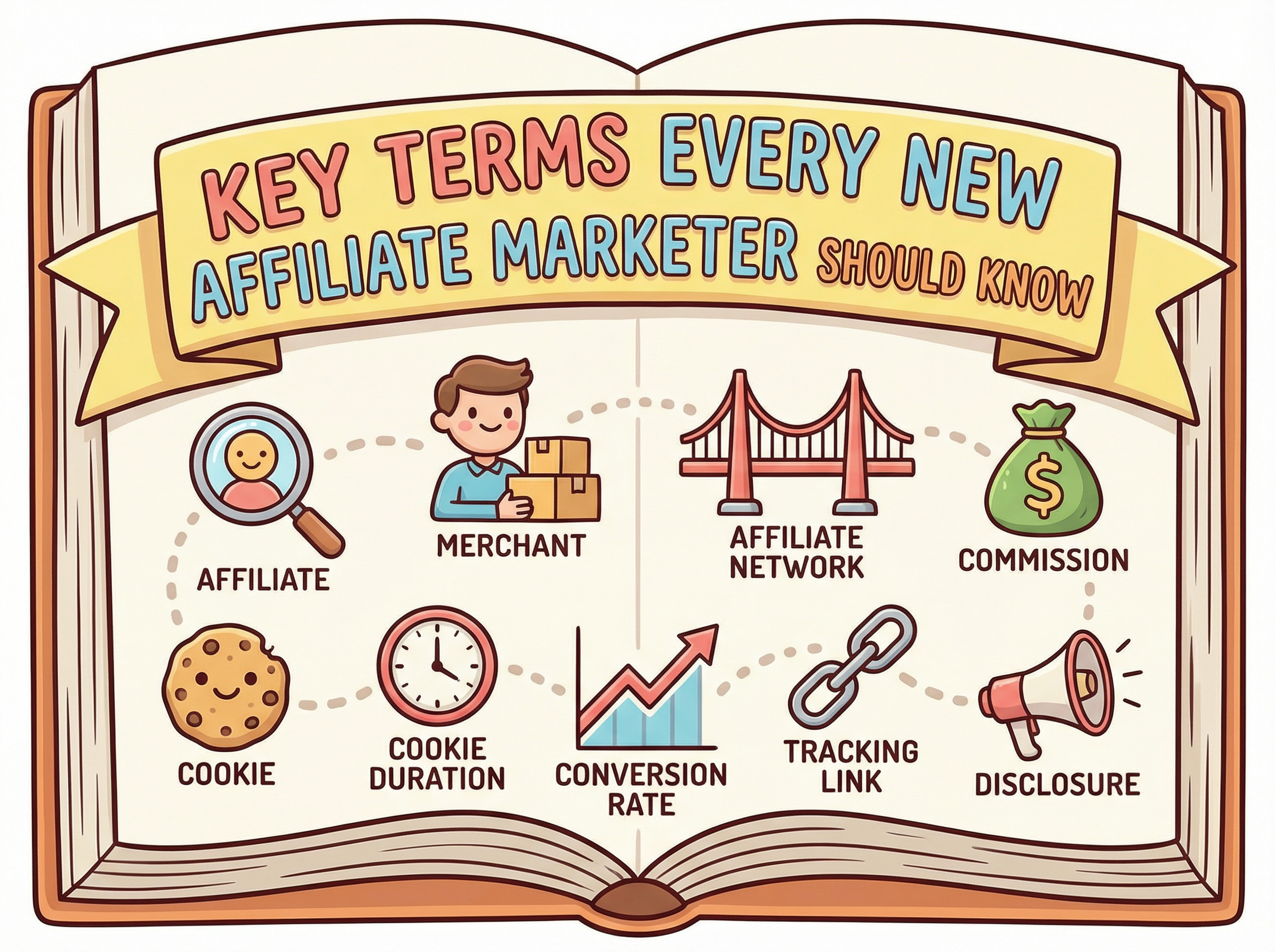
Fundamental Affiliate Marketing Terms Everyone Should Know
- Affiliate: This is you! An affiliate promotes other people’s or companies’ products and earns a commission for sales made through their referral link.
- Merchant (Advertiser): The owner or creator of the product. They pay the commission for sales or leads sent their way.
- Affiliate Network: A third-party platform connecting affiliates and merchants. They track sales, provide links, and often handle payouts. Examples include AWIN (previously ShareASale), CJ Affiliate, and ClickBank.
- Commission: The payout you receive when someone buys, signs up, or takes the desired action through your unique link.
- Cookie: A small file stored by browsers when someone clicks your affiliate link. It tracks who referred the sale and for how long.
- Cookie Duration: How long the affiliate program will count a sale after someone clicks your referral link, even if the purchase happens later.
- Conversion Rate: The percentage of traffic that takes your desired action, such as making a purchase or filling out a form.
- Tracking Link / Affiliate Link: A unique URL that records clicks and sales so you get paid correctly.
- Disclosure: A notice stating you’re using affiliate links. This is legally required to be transparent with your audience.
How These Terms Impact Your Success
Understanding these terms lets you join programs more easily, set up active funnels, and quickly spot any issues. Early on, I signed up for a program and was eager to share the product, but I missed out on a few sales because I didn’t thoroughly understand how cookies and links really worked. Spending a week learning the basics with the help of Wealthy Affiliate changed everything; they walk you through the process, making sure you don’t lose commissions over simple mistakes.
Affiliate Funnel Building: The Building Blocks
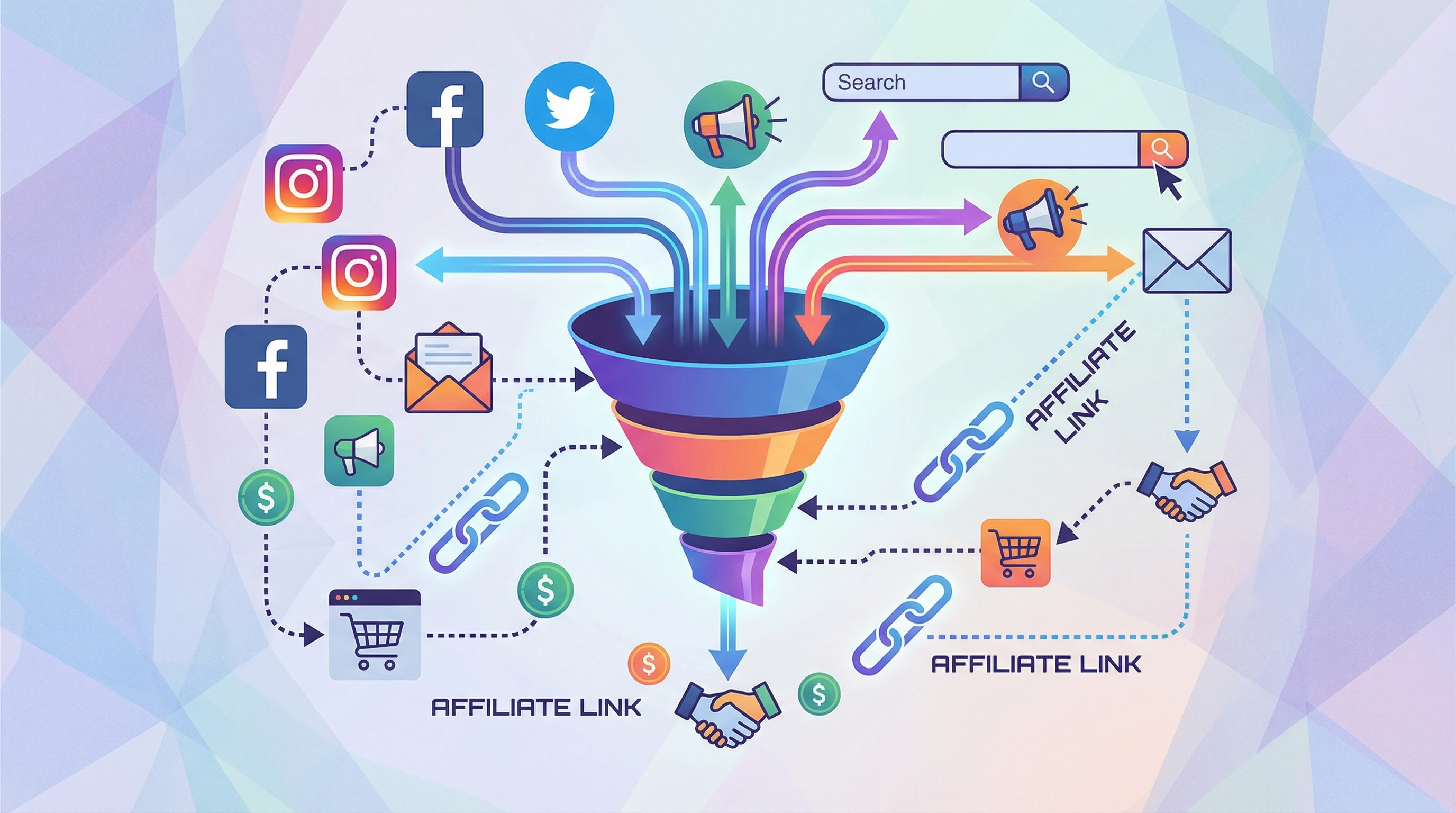
Funnels aren’t complicated once you get the idea. In affiliate marketing, a funnel means the steps someone takes from their first interaction all the way through to the final sale. Here are the terms related to funnels you should definitely know:
- Landing Page: The page where you send your audience when they click your affiliate link. It’s highly focused on one clear action.
- Lead Magnet: Freebies such as checklists, ebooks, or useful tools you offer to encourage visitors to give you their email when they arrive on your site.
- List Building: Collecting email addresses from interested visitors so you can continue the conversation and build trust, which grows future sales opportunities.
- Call-to-Action (CTA): A button, link, or phrase encouraging visitors to do something next. Examples: “Click here to learn more” or “Download now.”
- Bridge Page: A straightforward page between your content and the merchant’s sales page. It warms up prospects and can boost conversions by clearly sharing the benefits before the actual pitch.
All these pieces work together. My first several attempts at creating funnels involved just posting direct affiliate links on my pages. This approach rarely leads to solid conversions because people want some real value first. When I tried using bridge pages and set up email follow-ups, I started to see regular commissions instead of just the occasional random one.
Getting Deeper: Analytics and Optimization Lingo
Once your traffic and links are live, you’ll want to track and tweak your results. Knowing these analytics terms will help you figure out what’s working and what needs to be changed:
- Impression: Every time your affiliate link or banner appears to a user.
- Click-Through Rate (CTR): The percentage of people who click your link compared to those who see it.
- Return on Investment (ROI): The profit you make compared to how much you invest, whether in time or in money.
- Split Testing (A/B Testing): Running two versions of a page or email to check which gets better results.
- Earnings Per Click (EPC): The average amount you earn each time someone clicks your affiliate link. It’s handy for comparing different offers.
I began tracking my links with both free and paid tools. Watching EPC and CTR led me to focus on offers and traffic sources that actually brought in money. If you’re overwhelmed by the dozens of platforms out there, Wealthy Affiliate has built-in tracking and lessons for this area. You won’t need to juggle several dashboards just to see your progress.
Things You Might Be Wondering Before You Get Into It
I often get questions from new affiliates. Here are a few that popped up for me, too, plus what I’ve learned from testing and asking around:
- How do I select the best affiliate program? Stick to products and services you really believe in. Look for networks that provide good customer support. Higher commissions don’t always bring better results—offers that fit your audience will convert more often.
- How do I avoid losing commissions? Always share your unique tracking links and verify them first. Be sure to check cookie durations so you know how long you’ll get credit for a sale.
- How do I disclose my links the right way? Put a simple message near your affiliate links. For example: “This page contains affiliate links. If you buy through them, I’ll earn a commission at no extra cost to you.” This builds trust and keeps you on the right side of the law.
- Is training really necessary? You could try putting it all together on your own—believe me, I have! But following a guide or community path saves a lot of time and helps you avoid basic mistakes. Platforms like Wealthy Affiliate make this easier for beginners. Check out their training here for a hands-on shortcut to learning the ropes.
FAQ: Quick Answers About Affiliate Terms
Question: Why do cookie durations matter?
Cookie durations determine the window in which you can get credit after someone clicks your link. A program with a 30- or 90-day cookie gives you a longer shot at earning commissions, especially if buyers take their time.
Question: Should I use an affiliate network or go direct with merchants?
Both can be useful. Networks usually make things a bit easier since they centralize tracking and payouts. Direct programs might offer higher commissions or extra perks, so add a mix as your business picks up.
Question: What’s a bridge page and why should I use one?
Bridge pages build trust, add context, and get your visitors in the right mindset before showing them a sales page. They often increase conversions by setting clear expectations and sharing why the offer is worthwhile.
Next Steps: How Wealthy Affiliate Helps You Actually Use These Terms
Learning all the terminology is just the first step. Results start rolling in when you tie everything together—practical funnels, smart content, and a reliable tracking system. My earnings began to pick up once I walked through the Wealthy Affiliate training because their lessons cover every stage, from choosing affiliate programs to creating content that wins over readers.
If you’re ready to get started, take a look at Wealthy Affiliate here. The community and built-in tools make it so much simpler to experiment with fresh ideas and learn from people who’ve been there, done that.
Getting comfortable with the language of affiliate marketing is key to building your first profitable funnel and growing your results over time. Those “aha” moments come faster when you use helpful resources and learn from others’ experience. Best of luck with your affiliate adventure!